
App Development on a Budget: Strategies for Startups and Small Businesses
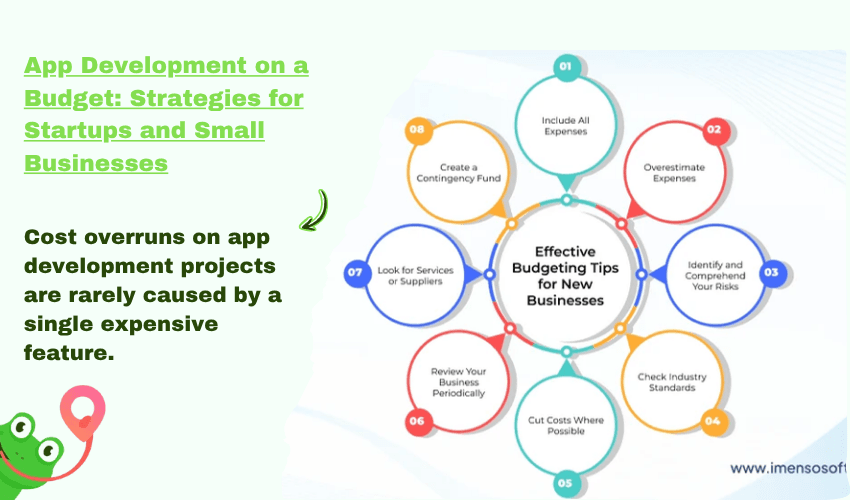

For most startups and small businesses, the app idea was never the hard part. The hard part is figuring out how to build it without burning through a year’s worth of runway before a single user has opened it. Development quotes for a “simple” app can range anywhere from a few thousand dollars to well over six figures, and founders are often left guessing which number actually applies to them — or worse, discovering the real number only after signing a contract.
The good news is that budget-conscious app development isn’t really about finding the cheapest possible developer. It’s about making a series of specific, informed decisions early — about scope, platform, and build approach — that keep costs proportional to what the business actually needs at its current stage. This article walks through the strategies that tend to separate startups who launch a workable app on a reasonable budget from those who overspend, undershoot their timeline, or end up with a product that doesn’t match what the market actually wanted.
Start With a Real Number, Not a Guess
One of the most common early mistakes is entering development conversations without any concrete sense of what a reasonable budget looks like. This puts founders at a disadvantage in two directions: they either lowball their expectations and get talked into a scope far beyond what they need, or they overestimate and pass on approaches that would have served them perfectly well.
Before any serious conversation with a development team, it’s worth getting a realistic, feature-based estimate rather than a rough guess pulled from a blog post or a friend’s anecdote. Tools like an app development cost calculator let founders input the specific platform, features, and design complexity they’re considering and get an instant, tailored range — without needing to sit through a sales call first. Having this number in hand does two things: it grounds budget conversations in the actual scope being discussed, and it gives founders a benchmark to sanity-check quotes against, so an unusually high or suspiciously low bid stands out immediately rather than being taken at face value.
Define the Minimum Viable Version, Then Cut Further
Nearly every founder has heard the term MVP, but in practice, many “minimum viable products” still include more than they need. A genuinely lean MVP includes only the features required to test the core assumption behind the business — not every feature envisioned for the eventual full product.
A useful exercise here is to separate features into three categories: what’s needed to test whether anyone wants this product at all, what improves the experience once demand is proven, and what’s aspirational but not load-bearing to the core value proposition. Founders on a tight budget should build only the first category initially. A ride-sharing app doesn’t need in-app chat, loyalty rewards, or multi-language support to validate whether people in a specific city will actually book rides through it. A marketplace app doesn’t need a recommendation engine before it has enough sellers and listings to make recommendations meaningful in the first place. Cutting a feature doesn’t mean abandoning it — it means sequencing it for after the business has real usage data to justify the additional investment.
Choose a Development Model That Matches the Budget, Not Just the Vision
This is where the biggest cost differences typically show up, and where founders often make decisions based on incomplete information about what their options actually are.
Fully custom development — building an app from scratch with no existing architecture to draw from — offers unlimited flexibility, but it’s also the most expensive and time-intensive path, frequently taking four to twelve months and costing tens of thousands of dollars even for a moderately scoped product. This route makes sense when the product genuinely has no comparable existing format to build from, but it’s rarely the right starting point for a budget-conscious founder testing a new idea.
White label mobile app development offers a middle path that’s often underused by early-stage founders who assume “custom” is the only way to get a differentiated product. A white-label approach starts from an already-built, proven application architecture — for categories like marketplaces, delivery apps, booking platforms, or social apps — and customizes the branding, feature set, and business logic around a specific use case. Because the underlying technical architecture doesn’t need to be engineered from zero, this route typically costs a fraction of a custom build and can go from kickoff to launch in a matter of weeks rather than months, while still allowing meaningful differentiation and, in most cases, full ownership of the resulting source code.
Low-code and no-code platforms represent the lowest-cost entry point, letting founders (or a small technical team) assemble an app using visual builders and pre-made components rather than writing custom code. This works well for simple internal tools, basic content-driven apps, or early prototypes meant purely for testing demand, but it tends to hit real limitations quickly for anything requiring custom business logic, complex integrations, or performance at scale.
The right choice depends on how differentiated the product actually needs to be to compete, and how much runway the business has before it needs to start generating revenue or proving traction to investors. A founder testing an unproven idea is usually better served by starting cheaper and simpler; a founder entering a competitive space where the underlying app format is already proven is often better served by a white-label approach that balances speed, cost, and differentiation.
Build for One Platform Before Both
Many early-stage founders assume they need to launch on iOS and Android simultaneously, but this decision alone can significantly inflate both cost and timeline. Building and maintaining two native codebases doubles a meaningful portion of development and testing work compared to focusing on a single platform first.
The more budget-conscious approach is to identify which platform the target audience actually uses more heavily — a decision that should be based on the specific market and demographic being targeted, not a generic assumption — and launch there first. Cross-platform frameworks that allow a single codebase to run on both platforms can also reduce this cost without requiring a full platform choice, though they come with their own trade-offs around performance and access to certain native device features. Either approach tends to be more capital-efficient than committing to full native development on two platforms before there’s evidence the product has real demand.
Negotiate Fixed-Scope Pricing, Not Open-Ended Hourly Billing
Cost overruns on app development projects are rarely caused by a single expensive feature. They’re usually caused by scope creep — small additions and changes that accumulate over the course of a project billed hourly, without anyone tracking how much the total has grown from the original plan.
Fixed-price or milestone-based contracts tend to protect budget-conscious founders far more effectively than open-ended hourly arrangements, because they force a clear scoping conversation upfront and create a natural checkpoint before any additional cost is approved. This requires more discipline during the planning phase — the scope needs to be defined clearly enough that a fixed price can be quoted with confidence — but that upfront discipline is exactly what prevents the quiet budget creep that derails so many first-time app projects.
Treat Post-Launch Costs as Part of the Budget, Not an Afterthought
A budget conversation that stops at “how much to build the app” is an incomplete one. Hosting, app store fees, ongoing maintenance, bug fixes, and any third-party API costs (payment processing, mapping services, messaging infrastructure) continue well after launch, and these costs scale with usage in ways that are easy to underestimate during initial planning.
Founders should ask any development partner directly what a realistic monthly operating cost looks like once the app has active users, not just what the one-time build costs. This is particularly important for apps relying on usage-based third-party services, where costs that seem negligible at ten users can become a meaningful line item at ten thousand. Budgeting for this from the outset avoids the uncomfortable scenario of having enough capital to build an app but not enough to keep it running once it starts gaining traction.
Validate Before Scaling Investment
Perhaps the most important budget discipline for any startup is resisting the urge to invest heavily in polish, additional features, or platform expansion before there’s real evidence the core product resonates with its intended audience. It’s tempting to want a fully-featured, beautifully designed app before a public launch, but that instinct often reverses the correct order of operations for a resource-constrained business.
A more disciplined sequence looks like this: launch the leanest version that can genuinely test the core assumption, gather real usage data and feedback, and only then direct further budget toward the specific features or platform expansions that data actually supports. This approach doesn’t just save money — it tends to produce a better product overall, since later investment is guided by real user behavior rather than internal assumptions about what users might want.
Use Existing Infrastructure Instead of Building Everything In-House
A related budget lever many first-time founders overlook is how much functionality can be handled by established third-party services rather than built and maintained internally. Payment processing, user authentication, push notifications, cloud hosting, analytics, and even customer support chat can all be integrated through mature, well-documented providers rather than developed from scratch.
Building these systems internally rarely makes financial sense for an early-stage product, since it means paying to solve problems that established providers have already spent years refining — often with better security, reliability, and compliance coverage than a small team could realistically build on a startup timeline. The cost of integrating a third-party payment gateway is almost always lower than the cost of building and maintaining a custom payment system, and the same logic extends to most infrastructure-level functionality. Reserving custom development effort for the parts of the product that are actually unique to the business — rather than the plumbing underneath it — tends to be one of the more reliable ways to keep a budget under control without compromising on core functionality.
Get Real Feedback Before Committing to a Full Build
Budget discipline doesn’t start when development begins — it starts before a single line of code is written. Founders who skip validation and move straight into a full build are often making a significant financial bet on assumptions that haven’t been tested with real users.
Lower-cost validation methods — a clickable prototype, a landing page collecting signups, a manual concierge version of the service run without any app at all — can surface critical information about what users actually want before committing development budget to build it. This doesn’t need to be an elaborate process. Even simple methods, like interviewing a handful of target users about their current workaround for the problem the app is meant to solve, often reveal assumptions that would have shaped the eventual feature list quite differently. The founders who spend a modest amount of time and money validating demand before committing to a full build tend to end up building a leaner, more accurately scoped product — which, in turn, keeps the actual development budget lower because there’s less guesswork built into the initial feature list.
Bringing It Together
None of these strategies require sacrificing quality or ambition — they require sequencing spending so that it matches what the business can actually validate and afford at each stage. Getting a realistic cost estimate before committing to a scope, choosing a development model that fits the budget rather than defaulting to the most expensive option, being disciplined about platform choice and contract structure, and planning for post-launch costs from day one are the habits that consistently separate startups that launch sustainably from those that run out of capital before finding out whether their idea actually works.
The businesses that navigate this well tend to treat their first app not as a finished product, but as a structured, budget-conscious experiment — one built to answer a specific question as efficiently as possible, with room to invest further once that question has a real answer.
