Unforgettable Experiences Every Traveler Should Try in Europe
There’s a certain level of disappointment we all feel from doing everything “right” while traveling and still coming home with nothing but boring photos. You end up trying hard to follow those routes, seeing those landmarks, eating the recommended dishes and yet, it all feels oddly flat when you try to remember at the end.
Europe, especially, has a way of resisting neat packaging. It doesn’t reveal much to people who rush through it collecting proof.
What it responds to is nothing except attention. Not efficiency, not bucket lists. Only attention.
We won’t talk about the biggest or the best or the most famous. We’ll stick to experiences that rearrange how travel feels, and about some moments that don’t announce themselves but end up being the ones you talk about years later.
Moving Through Europe Instead of Over It
Most modern travel skips over the in between. A typical tourist just ends up going from airport to hotel and from city to city visiting attraction after attraction by default. The spaces connecting these points disappear. That’s convenient, but it’s also where much of Europe actually exists.
This continent was shaped by rivers, footpaths, rail lines, and trade routes long before it was shaped by tourism.
River cruising through places that still function
Europe river cruising isn’t glamorous in the cinematic sense. There are no dramatic ocean horizons, no endless blue. Instead, there’s that thing called proximity. You pass close enough to wave to people hanging laundry, you see cyclists crossing bridges on their way to work, you dock in towns that were never meant to impress anyone, and things like that.
On the Danube, you will enter such locations as Dürnstein where apricot trees are planted in medieval walls, then Krems that reeks just a little of bread in the early morning. Then you see on the Rhine the castles are not monuments as such but they are an extension of the skyline like old neighbors who never left.
What makes this all so unforgettable isn’t the scenery alone but its continuity. You don’t arrive with a bang. You drift in. You don’t leave abruptly. You slide out. The experience feels closer to entering someone’s daily life than touring a destination.
Night trains and the lost pleasure of gradual arrival
Flying compresses geography into nothing. Night trains preserve distance.
Europe’s sleeper routes are slowly returning—not loudly, not with hype, but steadily. Routes between Vienna and Paris, Stockholm and Hamburg, Zurich and Prague. Compartments with thin curtains, narrow bunks, and that particular hum that only trains make.
You fall asleep with one language around you and wake up with another. Borders pass quietly in the night. Mountains slide by unseen. You arrive tired but intact. It changes how arrival feels. Less like teleportation, more like migration.
Staying Somewhere Long Enough to Matter
Travel culture celebrates movement. But memory tends to prefer stillness. There’s a difference between visiting a place and inhabiting it, even briefly.
The quiet value of small towns
Cities are easy to love. They announce themselves. Small towns require patience.
Spend four nights in a place like Piran, Český Krumlov, or Riquewihr, and something subtle happens. You stop navigating. You start recognizing. The bakery opens earlier than you thought. The square is loud at noon and empty by eight. Someone nods at you like they’ve seen you before—because they have.
These towns aren’t designed for consumption. They weren’t built for flow-through. They were built for staying. And staying changes how you look.
Knowing each other: intimacy.
You start to see patterns, where the postman delivered, where teenagers are talking, which bench is always occupied by the same pair of men talking. This isn’t romance. It’s reality. And it’s rare to travel. When you go it does not seem like you are checking out. It is as though you are walking out.
Eating as Observation, Not Performance
European food culture isn’t about spectacle. That’s a misunderstanding tourists often make. Meals are not declarations. They’re routines.
Letting food happen instead of hunting it
Some of the best meals in Europe come from not trying.
A bakery in Ljubljana that closes when it runs out. A café in Marseille that only serves three things. A tavern in Slovakia where the menu is handwritten and changes daily. You’re not meant to conquer cuisine. You’re meant to intersect with it. If a place has laminated menus in five languages, keep walking.
Learning the local pacing
In southern Italy, dinner unfolds slowly because it’s hot. In Scandinavia, coffee is social glue. In Austria, lunch is still respected.
These rhythms aren’t charming—they’re structural. Matching them, even temporarily, teaches you more than any food tour.
Landscapes That Don’t Try to Sell Themselves
Not all beauty in Europe is dramatic. Some of it is almost indifferent.
Walking paths that were never designed for you
There are footpaths in Europe that predate the concept of leisure walking. They connected farms, churches, mills, markets.
In the English Lake District, old stone paths zigzag up hills without explanation. In Slovenia, forest trails connect villages that don’t appear on Google Maps. In southern France, Roman routes still cut through vineyards. For women seeking guided experiences along these historic paths, women’s adventure travel companies organize multi-day treks like Spain’s Camino Primitivo, combining ancient pilgrimage routes with local cultural connections in Asturias and Galicia.
Walking these paths doesn’t feel like exercise. It feels like participation.
Coastal towns that weren’t built to impress
Many of Europe’s most honest coastal towns don’t have beach clubs. They have harbors. They have fishermen. They smell faintly of salt and diesel. Places like Rovinj, Sète, and Húsavík don’t sell fantasy. They sell function.
Sit long enough, and the town reveals itself.
Festivals That Aren’t for You
Tourist festivals are designed to be legible. Real ones aren’t.
Local celebrations that don’t explain themselves
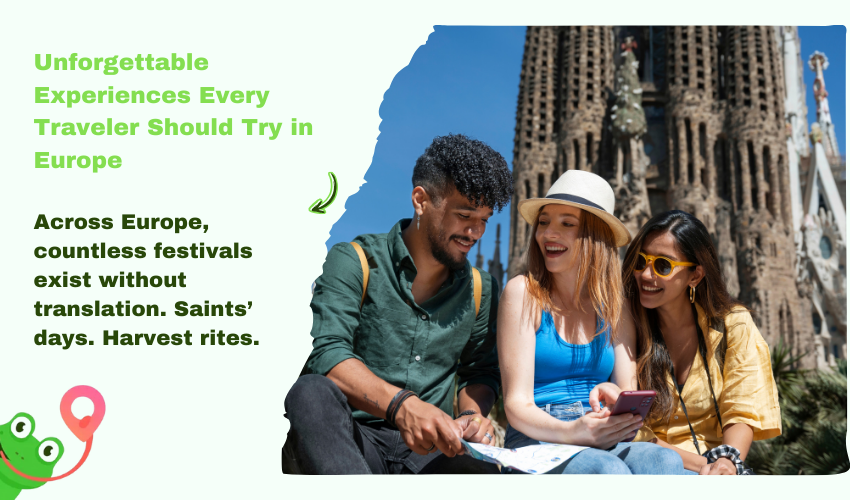
Across Europe, countless festivals exist without translation. Saints’ days. Harvest rites.
In parts of Spain, entire villages close for days. In rural Poland, midsummer bonfires appear without warning. In southern Germany, brass bands march for reasons no one feels obligated to explain. You are not the audience. You’re the observer. That’s what makes it special.
Seasons that still control life
Travel in off-seasons and you’ll see Europe differently.
Winter markets in Estonia feel intimate, not festive.
These aren’t backdrops. They’re conditions.
Learning to Waste Time Without Feeling Guilty
Europe was not designed around productivity.
Cities that resist efficiency
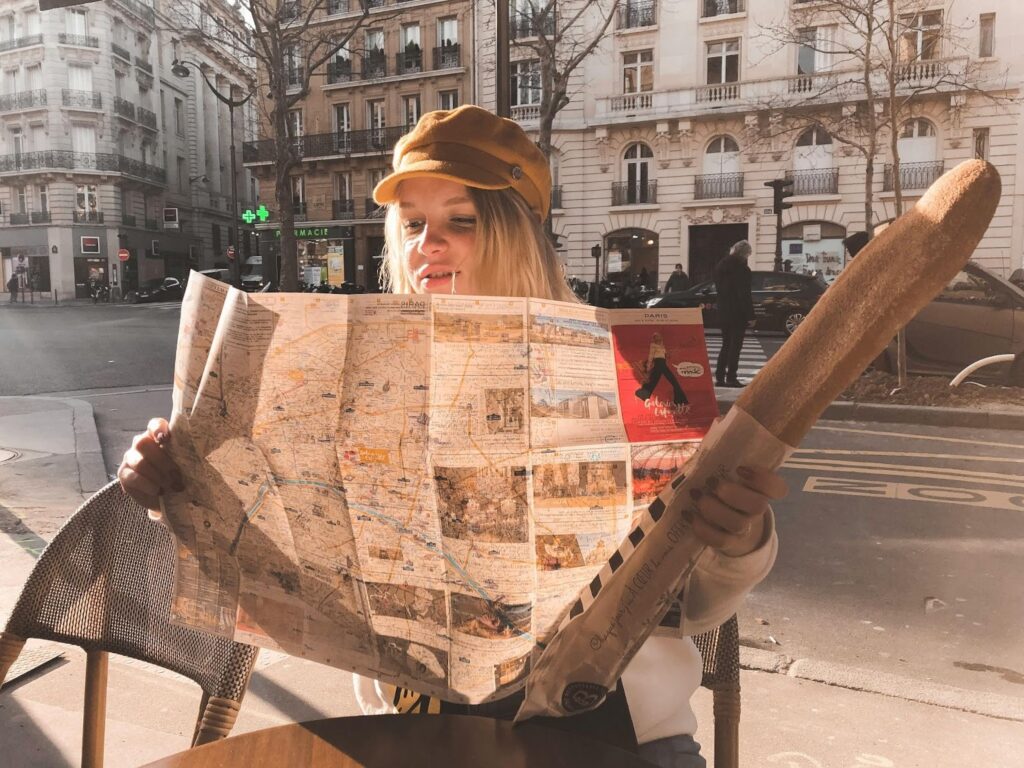
Paris doesn’t want to be optimized. Neither does Rome, Lisbon, or Naples. Their streets curve, interrupt, dead-end, reappear. Trying to “do” them is exhausting. Let them do you instead.
The value of uneventful days
Some of your best days will feel empty: coffee, walking, sitting, thinking. No monument. No agenda. That’s when a place starts to enter you.
Why These Experiences Stay
You won’t remember every name. But you’ll remember:
– A morning river mist
– The sound of a foreign language becoming familiar
– A town that felt strangely like yours
– A street you still think about
Europe doesn’t reward speed. It rewards presence. That’s the difference.